Free shipping above £ 25
 2 working day delivery
 Pay in 3 installments







How does salt work for your pool or hot tub?
Anyone who wants to enjoy a crystal-clear, clean pool in summer can't avoid disinfecting it properly. Salt cleans the water of your hot tub or pool, preventing algae and bacteria. These days we do everything in the most natural way possible. Cleaning your hot tub or pool with salt is the ideal and sustainable solution. You simply add the salt to the pool water and an installation converts the salt into sodium chloride. Sodium (salt) binds automatically with the water and chloride (chlorine) disinfects your pool. We're happy to explain exactly how this all works and what kind of installation this is.
Pool salt versus chlorine
You might be wondering by now why you can't just clean your pool with chlorine, especially since salt ultimately converts into chlorine too. Salt that is split by electrodes, unlike chlorine tablets, is produced in a natural way. Chlorine is a chemical disinfectant added to the water in tablet or granule form. Because of its chemical composition, many people suffer from red, dry eyes and itchy skin. Not very healthy, then!
What is salt electrolysis?
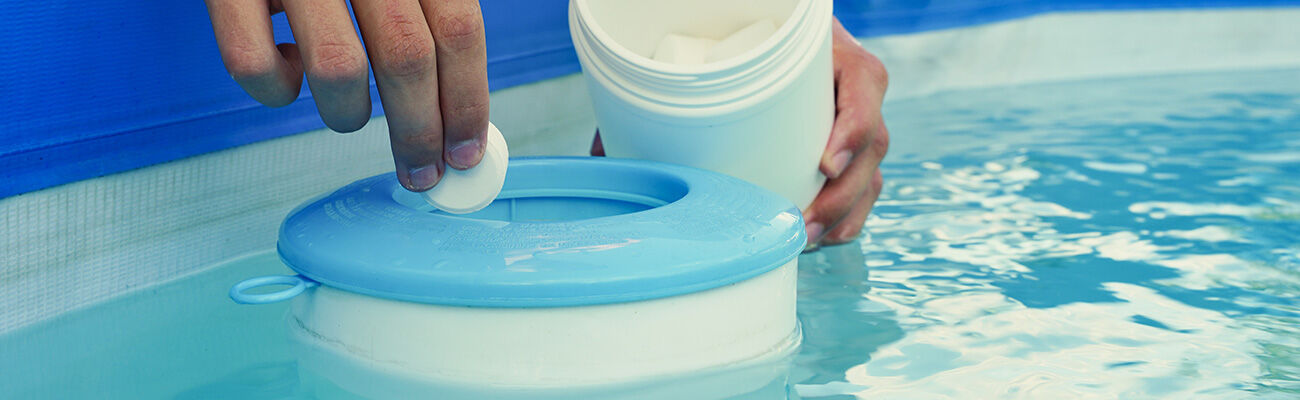
Salt electrolysis is a technique used to disinfect your pool. You only need to add the pool salt to your pool or hot tub at the start of the season. The electrolysis does the rest of the work all season long. The installation converts the salt into sodium chloride. Sodium (salt) binds with the water, and chloride (chlorine) disinfects the water. Once the chlorine stops working, it automatically converts back into salt through circulation. So the active component is still chlorine. However, the chlorine level is many times lower than when you use chlorine tablets or granules. You only need to add salt once a year. Cost-effective and sustainable!
Converting sodium chloride into chlorine
We understand all too well if the process still seems a little complicated. Fortunately it isn't, and we're happy to explain it further. Salt electrolysis ensures that salt (sodium chloride) is converted into chlorine and lye by low voltage. This composition gives algae and bacteria no chance to grow. As a result, you can enjoy a lovely clear, clean pool all season. When the water has been converted into chlorine, it is converted back into salt through circulation. A very sustainable way to clean your pool!
Pros and cons of pool salt
Before you decide to buy salt, you may want to know the pros and cons of salt as a disinfectant. We're happy to go through them with you, so that after reading this article you can make the right choice.
Pros:
Do you often suffer from red eyes while swimming? Then you probably disinfect your pool with chlorine. When you choose to clean your pool with salt, you'll no longer have this problem. The water in your pool becomes much softer when you choose salt instead of chlorine. Besides red eyes, dry and itchy skin will also disappear when you enjoy a lovely dip in the pool. As well as soft water in the pool, salt also means a lot less pool maintenance. You only need to add the salt to the water once a year and salt electrolysis takes care of the rest. After the salt has been naturally converted into chlorine, circulation converts it back into salt again. When you use salt as a disinfectant, you'll only notice a slightly salty taste. This slightly salty taste is negligible and far more pleasant than the taste of chemical chlorine. So when you use salt, you can enjoy low maintenance costs, healthy pool water and a clean pool in a sustainable way.
Cons:
A salt pool naturally doesn't only have advantages. The purchase is often seen as pricey and the salt can cause rust on aluminium and metal parts. However, these disadvantages pale against the many disadvantages of chlorine.
Switching from chlorine to salt as a disinfectant
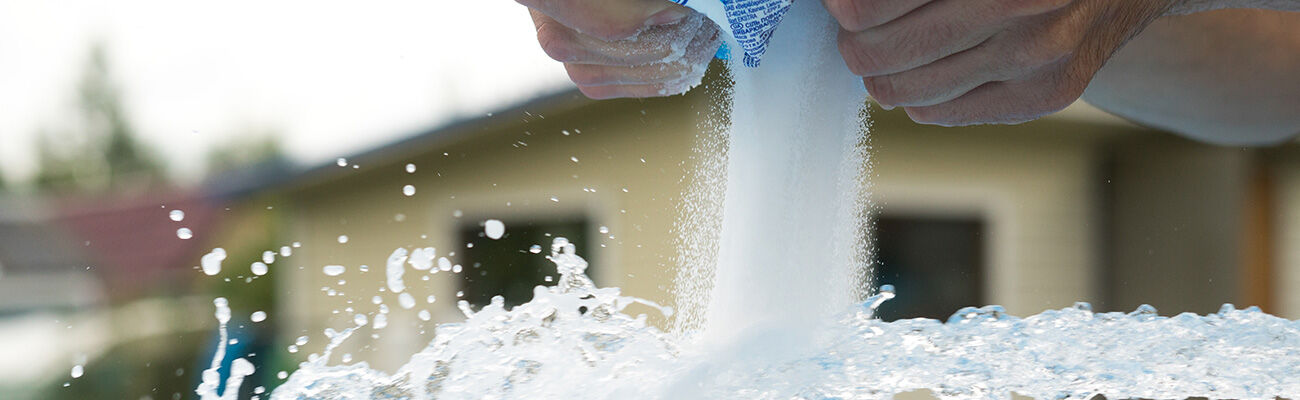
Are you currently using chlorine, but considering salt as a disinfectant for your pool? Fortunately, with a few small steps, that's no problem! First, replace the iron parts. Once you've replaced the iron parts, purchase an electrolysis installation. After that you only need to add salt to the pool, and you're ready for a wonderful swimming season with salt as a disinfectant!
Affordable pool salt
We mentioned as a disadvantage of salt as a disinfectant that buying a salt electrolysis installation is seen as pricey. This isn't really much of a drawback. You can use the installation for a long time, so the cost is one-off. The cost of an installation ranges from around £100 to £3,500. The price naturally depends on your personal wishes and requirements. The cost of the pool salt depends on the size of your pool. Do you have a small pool of around 10 m³? Two bags of Poolsel 25 kg are enough to disinfect your pool for a whole season. Nicely cost-effective!
Other ways of disinfecting
Salt and chlorine are the two best-known ways to clean your pool. However, there are other methods too. We're happy to list them for you:
Fully automatic disinfection and pH control:
Fully automatic disinfection and pH control uses chlorine. This system determines the dosage of chemicals. With fully automatic disinfection and pH control, you dose the chemicals in exactly the right amount, so a surplus and therefore irritation can be prevented. Although this method works well, it's still a chemical-based method.
Disinfection with ultraviolet light:
Ultraviolet light, also known as UV light, kills bacteria and algae in your pool water. Very expensive to buy, but effective. Especially for those who want to swim completely chlorine-free.
Still have questions about pool salt? We're here to help!
After reading this article, do you still have questions about the amount of pool salt needed? No problem, we're ready to help you further! You can reach us from 9:00 to 17:00 on 01902214281. Don't hesitate to contact us, we're happy to help.