Free shipping above £ 25
 2 working day delivery
 Pay in 3 installments







How to get your pool or hot tub ready for summer!
Is summer just around the corner and are you looking forward to a dip in your beautiful pool? Time to get your pool ready for summer! Don't know where to start? We're happy to go through everything with you, so you can enjoy a clean, pleasant pool with clear water this summer.
Cleaning your pool: step by step
Step 1: clean the cover
If you use a cover, you can remove any leaves and twigs lying on it. You naturally don't want this debris ending up in the pool. Storing the cover while dirty isn't a good idea either. So clean it thoroughly first with a soft brush and let it dry before storing it in a dry place. Do you use a roller cover? This also needs to be cleaned thoroughly first!
Step 2: remove debris
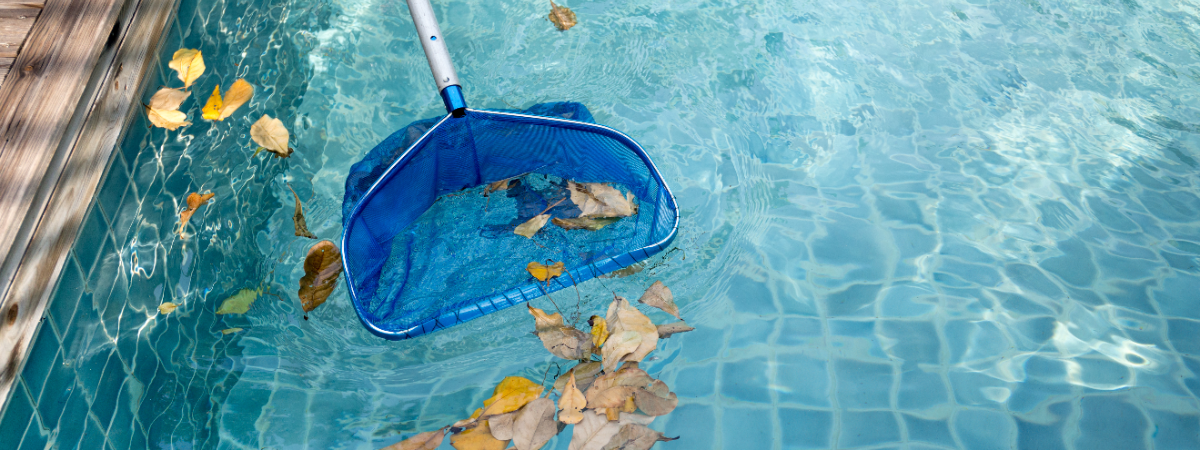
After you've cleaned and stored the cover, you can use a skimmer net to remove the debris that has collected in the water over winter. Is there debris deeper in the pool? A deep net helps you remove this waste.
Step 3: remove pool accessories
You probably placed gizzmos and winter floats in the water when you got the pool ready for winter. You can remove these when getting the pool ready for summer. The winter plugs can now be removed too.
Step 4: clean the skimmer
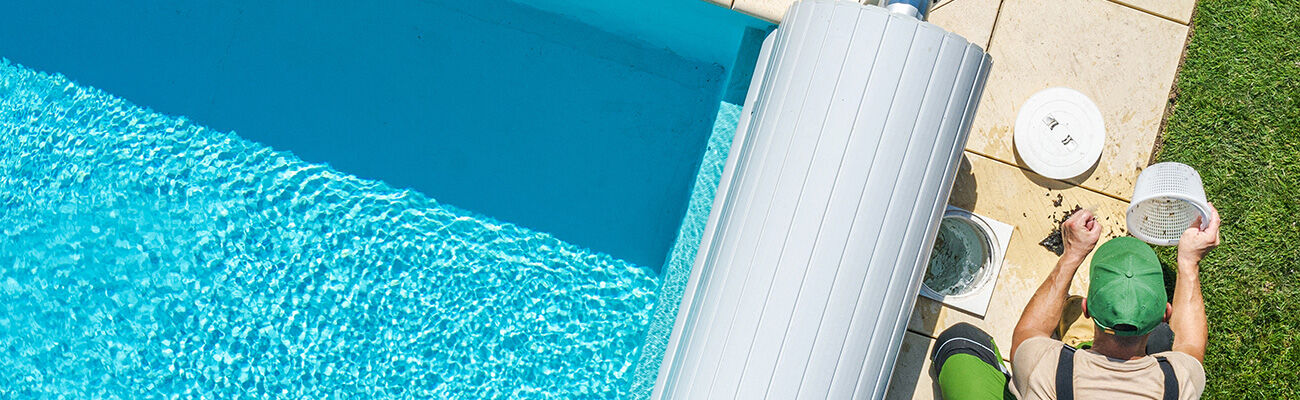
Once you've removed everything, you can clean the skimmer with a plastic cleaner and a scrubbing brush. Do this with the right product, otherwise you risk damaging your drain. While cleaning the skimmer, you can also empty the collection filters at the same time.
Step 5: clean the pool
You can easily clean the bottom with an automatic robot or vacuum cleaner. You can clean the sides yourself with a soft brush. Do you see black marks on the waterline? Then you're probably dealing with limescale. Fortunately this needn't be a problem. You can clean the waterline easily and affordably with a waterline cleaner.
Topping up the pool
Before you can swim again, it's important there's enough water in the pool. Use tap water for this! The iron value and pH value of groundwater can be high and this is harmful to health.
Checking the pool for leaks
Pool leaks aren't always easy to spot when you have an outdoor pool. Do you have a built-in pool? Then look carefully for damp spots in the ground. Damp spots and subsidence in the ground show there's a leak somewhere. Don't know how to fix a leak? Then call in a specialist to help you.
Carrying out a backwash
A pool filter can become clogged. It's therefore advisable to carry out a backwash when getting your pool ready for summer. Depending on which pool pump you use, you can switch on the 'backwash' option. The manual will tell you exactly how to carry out this backwash and how long it takes. After getting your pool ready for summer, carry out a backwash weekly.
Filtering the pool water
After carrying out a backwash, it's time to filter the pool water. It's best to let the sand filter pump filter for a few days. When the water is no longer cloudy, the pool water is clean.
Checking water quality
Before you can really enjoy your pool, it's important that the water quality is right. You can easily check the pH value and chlorine level with a test strip.
Measuring pH value
It's important that the pH value is right. Is it too low? Then you may suffer from irritated eyes and irritated skin. It's also bad for the pool material. A pH value that's too high can give dangerous bacteria the chance to grow. Healthy pool water has a pH value between 7.2 and 7.6. When the pH value is lower than 7.2, you can adjust the level with pH Plus. Is the pH value higher than 7.6? Then use pH Minus.
Measuring chlorine level
Once the pH value is right, it's time to measure the chlorine level. A healthy chlorine level is one milligram per litre. Does the chlorine level differ from this? You can use salt electrolysis.
What is salt electrolysis?
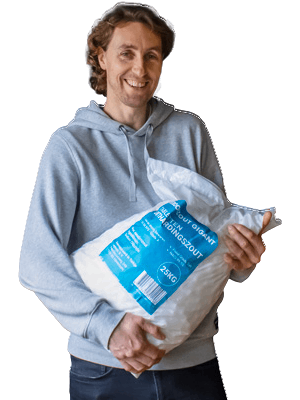
Salt electrolysis might sound very complicated, but fortunately it isn't! With salt electrolysis you use salt as a disinfectant. A salt electrolysis installation converts the salt into sodium chloride. Sodium (salt) binds automatically with the pool water and chloride (chlorine) disinfects the pool. This disinfects your pool in a sustainable way and automatically gets the pH value right. It also prevents algae and bacteria. When you use this technique, you only need to add salt to the pool once a year. The installation does the rest. And that's not all! When you use this technique, you'll have far less trouble with red eyes and dry skin after swimming. Pool salt, such as Poolsel 25 kg, is much less aggressive than chlorine. Sustainable, affordable and a lot healthier than chlorine tablets!
Interim maintenance
Getting your pool ready for summer is of course only part of the job. It's important to measure the chlorine level about twice a week and to check the pH values carefully. It's also important to empty the skimmer's collection filters regularly and to carry out a backwash weekly. It's a good idea to clean the bottom drain suction regularly too. Only when you carry out pool maintenance properly are you assured of a healthy, clear pool!
Do you have questions about cleaning your pool or hot tub? We're here to help!
After reading this article, do you still have questions about how to get your pool or hot tub ready for summer? No problem, we're ready to help you further! You can reach us from 9:00 to 17:00 on 01902214281. Don't hesitate to contact us, we're happy to help.